
Exploring the realm of Sage 100 ERP, this piece invites readers with a wealth of knowledge, promising an enriching and unique reading experience.
Delve into the details of this powerful software solution that caters to businesses of all sizes and industries.
Overview of Sage 100 ERP
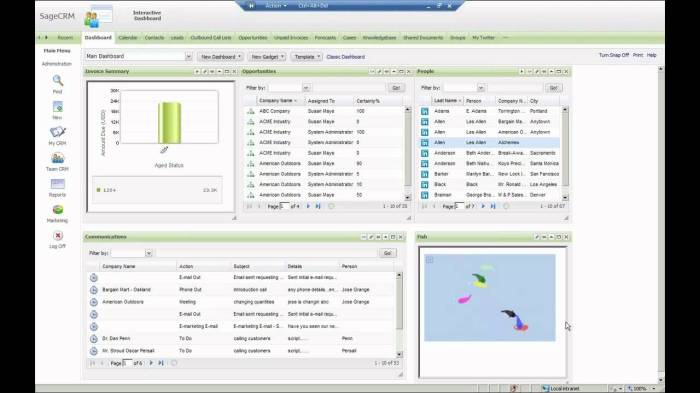
Sage 100 ERP, formerly known as Sage MAS 90 and 200, is a robust enterprise resource planning software solution designed to streamline business processes, improve efficiency, and provide valuable insights for decision-making.
Brief History of Sage 100 ERP
Sage 100 ERP was first introduced by Sage Software in the 1980s as MAS 90, targeting small to mid-sized businesses. Over the years, the software evolved to include more features and functionalities, eventually leading to the rebranding as Sage 100 ERP.
Core Features and Functionalities of Sage 100 ERP
- Financial Management: Sage 100 ERP offers comprehensive financial tools to manage accounting, budgeting, and financial reporting.
- Inventory Management: The software provides inventory tracking, order processing, and warehouse management capabilities.
- Sales and Customer Management: Sage 100 ERP includes CRM tools to manage sales processes, customer relationships, and marketing campaigns.
- Business Intelligence: Users can access real-time data and analytics to make informed business decisions.
- Customization and Integration: Sage 100 ERP can be tailored to specific business needs and seamlessly integrated with other systems.
Target Market for Sage 100 ERP
Sage 100 ERP is ideal for small to mid-sized businesses across various industries, including manufacturing, distribution, retail, and services. Companies looking to streamline operations, improve financial visibility, and enhance customer relationships can benefit from implementing Sage 100 ERP.
Implementation of Sage 100 ERP
Implementing Sage 100 ERP involves a series of steps aimed at ensuring a smooth transition to the new system and maximizing its benefits for the organization.
Steps Involved in Implementing Sage 100 ERP
- Planning: Define project scope, set objectives, allocate resources, and create a timeline for implementation.
- Configuration: Customize Sage 100 ERP to meet the specific needs of the organization, including setting up modules, workflows, and user permissions.
- Data Migration: Transfer existing data from legacy systems to Sage 100 ERP while ensuring data integrity and accuracy.
- Training: Provide comprehensive training to employees on how to use Sage 100 ERP effectively to optimize workflows and productivity.
- Testing: Conduct thorough testing of the system to identify any issues or bugs before going live.
- Go-Live: Transition to Sage 100 ERP, monitor performance, and address any immediate concerns post-implementation.
- Support and Maintenance: Provide ongoing support, updates, and maintenance to ensure the system continues to function smoothly.
Role of Stakeholders During Implementation
- Executive Sponsor: Provides leadership, support, and resources for the implementation process.
- Project Manager: Oversees the implementation project, coordinates activities, and ensures project milestones are met.
- End Users: Actively participate in training, provide feedback, and adapt to using Sage 100 ERP in their daily tasks.
- IT Team: Assists in system configuration, data migration, testing, and ongoing support of Sage 100 ERP.
Common Challenges Faced During Implementation of Sage 100 ERP
- Resistance to Change: Employees may be hesitant to adopt new processes and technologies, requiring effective change management strategies.
- Data Quality Issues: Ensuring data accuracy and consistency during migration can be a challenge, leading to potential errors in the system.
- Lack of Training: Inadequate training can result in underutilization of Sage 100 ERP and hinder the realization of its full potential.
- Integration with Existing Systems: Integrating Sage 100 ERP with other systems within the organization may present compatibility issues that need to be addressed.
Customization and Integration
Customization and integration are key aspects of leveraging the full potential of Sage 100 ERP. By tailoring the software to fit specific business needs and seamlessly integrating it with other systems, companies can optimize their operations and improve efficiency.
Customization Options in Sage 100 ERP
Sage 100 ERP offers a range of customization options to meet the unique requirements of different businesses. Users can personalize workflows, reports, and dashboards to align with their specific processes and priorities. Custom fields, user-defined fields, and custom alerts are just a few of the ways in which Sage 100 ERP can be tailored to suit individual preferences.
Integration with Other Software or Systems
Sage 100 ERP can be integrated with a variety of third-party applications and systems to streamline processes and enhance functionality. By connecting with CRM software, e-commerce platforms, or inventory management systems, businesses can achieve a more comprehensive view of their operations and improve data accuracy across different departments.
Industries Benefiting from Customized Sage 100 ERP Solutions
- Manufacturing: Customized Sage 100 ERP solutions can help manufacturers optimize production processes, track inventory levels more effectively, and improve supply chain management.
- Retail: Retail businesses can benefit from customized Sage 100 ERP solutions by enhancing customer relationship management, streamlining sales processes, and gaining insights into consumer behavior.
- Distribution: Customized Sage 100 ERP solutions for distribution companies can improve order fulfillment, inventory control, and logistics management, leading to increased efficiency and cost savings.
Training and Support
Training and support are crucial components for maximizing the benefits of using Sage 100 ERP. Proper training ensures that users understand the software's functionalities, while ongoing support helps resolve any issues that may arise.
Training Programs
- Sage offers comprehensive training programs for new users to get acquainted with Sage 100 ERP. These programs cover everything from basic navigation to advanced features.
- Training sessions can be conducted in-person or online, providing flexibility for users to choose the most convenient option.
- Users can also access a library of training resources, including videos, guides, and tutorials, to enhance their knowledge and skills.
Importance of Ongoing Support
- Ongoing support is essential to address any technical issues or questions that users may encounter while using Sage 100 ERP.
- Having access to a support team ensures that users can quickly resolve any issues, minimizing downtime and optimizing productivity.
- Regular updates and patches are also provided through support services, ensuring that the software is up-to-date and secure.
Best Practices for Maximizing Training and Support Resources
- Encourage users to attend training sessions regularly to stay updated on new features and functionalities.
- Establish a dedicated support channel for users to report issues or seek assistance in a timely manner.
- Create a knowledge-sharing platform where users can exchange tips and best practices for using Sage 100 ERP effectively.
Security and Compliance
In today's digital landscape, security and compliance are crucial aspects for any organization utilizing an ERP system like Sage 100 ERP. Let's delve into the security features and compliance requirements that Sage 100 ERP offers.
Security Features in Sage 100 ERP
Sage 100 ERP provides a range of security features to safeguard sensitive data and protect against potential threats. Some of the key security measures included in Sage 100 ERP are:
- Role-based security: Administrators can assign specific roles and permissions to users, ensuring that access to sensitive information is restricted based on job responsibilities.
- Encryption: Data encryption capabilities within Sage 100 ERP help ensure that information is securely stored and transmitted, reducing the risk of unauthorized access.
- Audit trails: Detailed audit trails track user activities within the system, allowing for monitoring and accountability in case of any security breaches.
Compliance Requirements Addressed by Sage 100 ERP
Sage 100 ERP assists organizations in meeting various compliance requirements by offering features that ensure data integrity, confidentiality, and regulatory adherence. Some compliance requirements that Sage 100 ERP helps organizations meet include:
- GDPR (General Data Protection Regulation): Sage 100 ERP helps organizations comply with GDPR regulations by providing tools for data protection, privacy, and consent management.
- SOX (Sarbanes-Oxley Act): The system's security controls and audit capabilities aid in meeting SOX compliance requirements related to financial data protection and transparency.
Customizable Security Measures in Sage 100 ERP
In addition to the built-in security features, Sage 100 ERP allows organizations to customize security measures to align with their specific needs and industry requirements. Some examples of security measures that can be customized in Sage 100 ERP include:
- Two-factor authentication: Organizations can implement two-factor authentication for enhanced user verification and access control.
- Customized user permissions: Administrators can tailor user permissions to restrict access to certain modules or data fields within Sage 100 ERP.
- Integration with third-party security tools: Sage 100 ERP can be integrated with third-party security solutions to enhance overall data protection and threat detection capabilities.
Closing Summary
In conclusion, Sage 100 ERP stands as a robust tool for businesses seeking streamlined operations and enhanced productivity. With its customizable features and strong support system, it continues to empower organizations worldwide.
General Inquiries
What is the history of Sage 100 ERP?
Sage 100 ERP, formerly known as MAS 90 and MAS 200, has a long-standing history dating back to the 1980s. It has evolved over the years to become a comprehensive business management solution.
How can Sage 100 ERP be integrated with other systems?
Sage 100 ERP offers integration capabilities with various software and systems through APIs and connectors, allowing seamless data flow and process automation.
What industries benefit the most from customized Sage 100 ERP solutions?
Industries such as manufacturing, distribution, and retail find tailored Sage 100 ERP solutions particularly beneficial due to their specific operational needs and requirements.
What security measures can be customized in Sage 100 ERP?
Sage 100 ERP allows for custom security settings such as user access controls, data encryption, and audit trails to enhance data protection and compliance with security standards.