
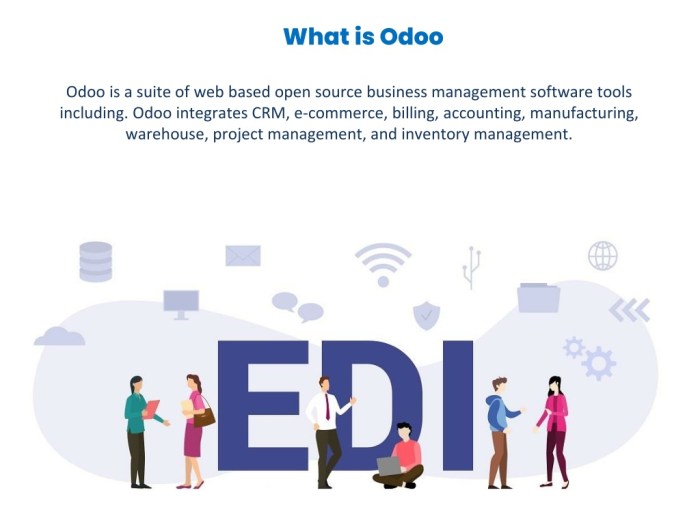
In today's fast-paced business landscape, Odoo EDI emerges as a game-changer, revolutionizing the way companies manage their data exchange processes. From defining the acronym EDI to exploring its seamless integration with various industries, this article delves into the world of Odoo EDI with precision and insight.
As we navigate through the features, implementation steps, and integration possibilities, readers will gain a comprehensive understanding of how Odoo EDI can elevate their business operations to new heights.
Overview of Odoo EDI
Electronic Data Interchange (EDI) is a system that allows businesses to exchange documents electronically in a standardized format. This streamlines the communication process between trading partners by eliminating manual data entry and reducing errors.In the realm of business operations, EDI plays a crucial role in automating the exchange of business documents such as purchase orders, invoices, and shipping notices.
By integrating EDI into their systems, companies can improve efficiency, reduce costs, and enhance accuracy in their transactions.
Benefits of Odoo EDI Integration
- Efficient Order Processing: Odoo EDI integration helps in automating order processing, from receiving orders to sending invoices, leading to faster and more accurate transactions.
- Improved Inventory Management: By syncing data between systems in real-time, businesses can maintain optimal inventory levels and avoid stockouts or overstock situations.
- Enhanced Customer Relationships: Streamlining communication with trading partners through EDI can result in improved customer satisfaction due to faster order fulfillment and fewer errors.
Features of Odoo EDI
Odoo EDI offers a range of features that enhance communication and streamline operations for businesses engaging in electronic data interchange (EDI).
Key Features of Odoo EDI
- Integration with various business applications for seamless data exchange.
- Automated data mapping and transformation to ensure compatibility between systems.
- Real-time monitoring and tracking of EDI transactions for improved visibility.
- Support for multiple document types such as orders, invoices, and shipping notices.
- Configurable workflows and alerts to manage exceptions and ensure timely processing.
Streamlining Communication Between Partners
Odoo EDI acts as a bridge between trading partners by facilitating the exchange of electronic documents in a standardized format. By automating the transfer of data, Odoo EDI eliminates manual intervention, reducing errors and speeding up the communication process. This seamless communication ensures that partners can collaborate efficiently and effectively, leading to improved business relationships.
Advantages of Using Odoo for EDI Purposes
- Cost-effective solution compared to traditional paper-based processes.
- Enhanced accuracy and reliability of data exchange, minimizing the risk of errors.
- Improved efficiency and productivity through automation of routine tasks.
- Scalability to accommodate growing business needs and increased transaction volumes.
- Compliance with industry standards and regulations for secure data transmission.
Implementation of Odoo EDI
Implementing Odoo EDI involves several key steps to ensure successful integration and streamline electronic data interchange processes within the organization.
Setting Up Odoo for EDI Integration
To set up and configure Odoo for EDI integration, follow these best practices:
- Ensure all relevant modules for EDI are installed in Odoo.
- Set up communication protocols for data exchange with external systems.
- Create mappings between Odoo data fields and EDI standards for seamless data transfer.
- Configure automated workflows for EDI transactions to minimize manual intervention.
- Test the EDI integration thoroughly to validate data accuracy and system compatibility.
Best Practices for Successful Odoo EDI Implementation
- Engage key stakeholders from different departments to ensure alignment and collaboration.
- Provide comprehensive training to users on EDI processes and system usage.
- Regularly monitor EDI transactions and performance metrics to identify and address any issues promptly.
- Stay updated on EDI standards and regulations to comply with industry requirements.
- Establish clear communication channels with trading partners for efficient data exchange.
Integration with Odoo Modules
When it comes to integrating Odoo EDI with other Odoo modules, the possibilities are endless. This seamless integration allows for a more streamlined and efficient workflow within your organization.
Inventory Management
- Odoo EDI can be integrated with the Inventory Management module to automate the process of updating inventory levels, managing stock movements, and tracking product availability.
- By integrating with Inventory Management, Odoo EDI ensures that accurate and real-time inventory data is always available, reducing the risk of stockouts or overstock situations.
Sales and Purchase
- Integration with the Sales and Purchase modules enables automated order processing, invoicing, and payment reconciliation.
- Odoo EDI streamlines the entire sales and purchase cycle, from order placement to delivery, by eliminating manual data entry and reducing errors.
Accounting
- By integrating with the Accounting module, Odoo EDI facilitates seamless financial transactions, including invoice generation, payment processing, and reconciliation.
- Automating accounting processes through EDI integration ensures accurate financial data and improves overall financial management within the organization.
Summary
In conclusion, Odoo EDI offers a potent blend of efficiency, accuracy, and scalability, making it a vital tool for modern businesses looking to streamline their operations. By harnessing the power of Odoo EDI, companies can unlock new opportunities for growth and success in a competitive market environment.
General Inquiries
What does EDI stand for?
Electronic Data Interchange
How does Odoo EDI streamline communication between partners?
Odoo EDI automates the exchange of business documents in a standardized electronic format, reducing manual errors and improving efficiency in partner communications.
What are some examples of industries that benefit from Odoo EDI integration?
Manufacturing, retail, logistics, and healthcare are among the industries that benefit from Odoo EDI integration by enhancing data exchange processes and optimizing operations.
What are the key features of Odoo EDI?
Some key features include document mapping, data transformation, real-time monitoring, and seamless integration with various systems.
How can companies set up and configure Odoo for EDI integration?
Companies can set up Odoo for EDI integration by configuring communication protocols, mapping data fields, and testing the system for seamless data exchange.